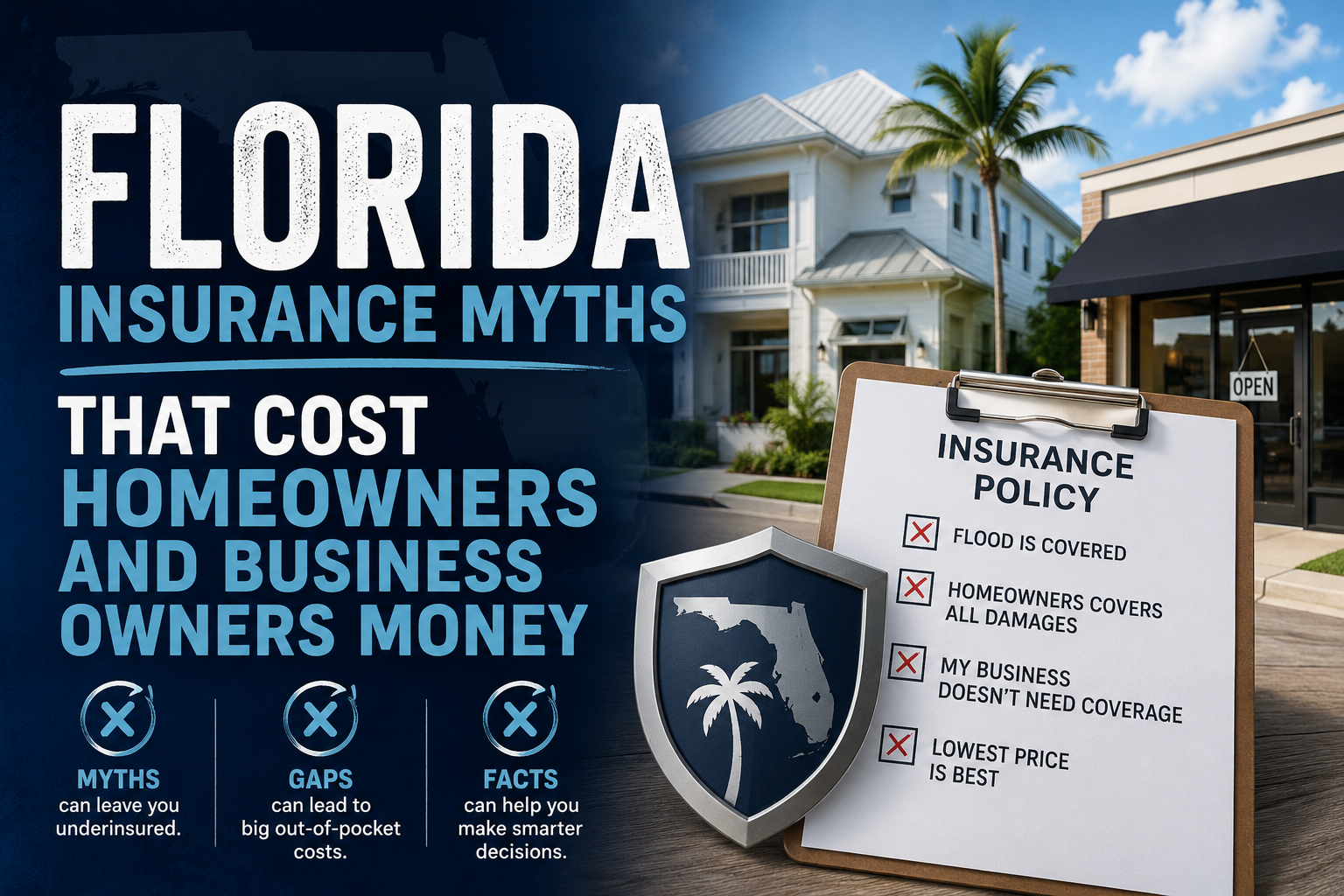
Common Coverage Gaps That Put Emerald Coast Businesses at Risk
You've built your business from the ground up. You've invested countless hours, substantial capital, and taken significant personal risk to create something successful. But when it comes to insurance protection, even experienced business owners across the Emerald Coast make mistakes that can threaten everything they've worked to build.
Over forty years of serving Florida businesses, we've seen these coverage gaps play out in real claims situations. The good news is that most of these mistakes are completely avoidable once you know what to look for. Understanding where businesses commonly fall short on insurance protection helps you make better decisions about your own coverage.
Let's walk through the five most common business insurance mistakes we see Florida owners make and how to avoid them.
Mistake 1: Assuming General Liability Covers Everything
Many business owners purchase general liability insurance
and believe they're fully protected. General liability is essential coverage, but it's not a catch-all policy.
General liability typically covers third-party bodily injury and property damage. A customer slips and falls in your store? That's covered. Your employee accidentally damages a client's property while working? Covered.
But general liability doesn't cover:
Your own property:
If your building, equipment, or inventory is damaged, general liability won't pay for it. You need commercial property insurance for that.
Professional mistakes:
If you provide advice, designs, or professional services and a client suffers financial loss due to an error, general liability won't respond. You need professional liability or errors and omissions coverage.
Employee injuries:
When one of your employees gets hurt on the job, that's a workers compensation claim, not a general liability claim.
Cyber incidents:
Data breaches, ransomware attacks, and other digital threats require specialized cyber liability coverage.
Your vehicles:
Commercial auto insurance is separate from general liability, even if your business owns the vehicles.
The solution is building a comprehensive business insurance program that addresses all your exposures, not just one type of risk.
Mistake 2: Underinsuring Property and Equipment
Business owners frequently underestimate the replacement cost of their property, equipment, and inventory. This often happens gradually as businesses grow and acquire more assets without updating their insurance accordingly.
Consider a restaurant on the Emerald Coast. The owner purchased property insurance five years ago covering $200,000 in equipment and furnishings. Since then, they've added a new commercial refrigeration system, upgraded the POS system, expanded the dining area with new furniture, and increased inventory to meet growing demand. The actual replacement value is now closer to $350,000, but the insurance still only covers $200,000.
When a kitchen fire causes extensive damage, the owner discovers they're significantly underinsured. The insurance company pays the policy limit of $200,000, but the business faces a $150,000 gap to fully rebuild and reopen.
How This Happens
Inflation and rising costs:
Construction materials, equipment, and furnishings cost more today than they did when you first purchased coverage.
Business growth:
As your business expands, you acquire more property that needs coverage.
Additions and improvements:
New purchases, renovations, and upgrades increase your total property value.
Forgetting about contents:
Many business owners focus on the building itself but underestimate the value of what's inside.
The fix is conducting annual property valuations and updating your commercial property insurance
accordingly. Your insurance agent should be reviewing these limits with you regularly, not just when you call with a problem.
Mistake 3: Operating Without Workers Compensation
This mistake is particularly common among small businesses and startups in Florida. Some business owners don't realize workers compensation is required by law once they reach certain thresholds, while others try to avoid the cost by misclassifying employees as independent contractors.
Florida law requires most businesses with four or more employees to carry workers compensation insurance. Construction businesses need coverage with just one employee. Operating without required coverage exposes you to severe penalties, including fines of up to $1,000 per day for non-compliance and potential criminal charges.
Beyond legal requirements, workers compensation insurance
protects your business from devastating lawsuits. When you have workers comp coverage, injured employees generally cannot sue your business for their injuries. They receive medical care and wage replacement through the insurance, and you're protected from potentially bankrupting litigation.
Without workers comp, an injured employee can sue your business directly. You're responsible for their medical bills, lost wages, pain and suffering, and legal fees. A single serious injury could put you out of business.
The Independent Contractor Trap
Some businesses try to avoid workers comp costs by classifying workers as independent contractors instead of employees. This is risky for multiple reasons.
Florida law and the IRS have specific tests to determine whether someone is truly an independent contractor. If you're providing tools, setting schedules, controlling how work is performed, and paying regular wages, those workers are likely employees regardless of what your paperwork says.
When an audit occurs (and insurance companies do audit), misclassified workers will be reclassified as employees. You'll face a substantial bill for unpaid workers comp premiums, plus penalties and potential legal consequences.
Mistake 4: Neglecting Cyber Liability in a Digital World
Twenty years ago, cyber liability insurance was relevant only for technology companies. Today, virtually every business faces cyber risk, yet many Florida business owners still operate without this critical coverage.
Your business has cyber exposure if you:
Store customer information electronically, including names, addresses, phone numbers, or email addresses
Process credit card payments
Maintain employee records digitally
Use email for business communication
Have a website
Rely on computer systems for daily operations
In other words, nearly every modern business needs to consider cyber liability insurance.
Real Cyber Threats Facing Small Businesses
Ransomware attacks:
Criminals lock your systems and demand payment to restore access. Even if you don't pay the ransom, you face costs for forensic investigation, system restoration, and business interruption.
Data breaches:
If customer or employee data is stolen, you may face notification requirements, credit monitoring costs, regulatory fines, and lawsuits.
Phishing scams:
An employee clicks a malicious link or sends money to a fraudulent account. Cyber insurance can help cover these losses.
System failures:
Even without criminal activity, technical failures can shut down your operations, and cyber policies often cover business interruption from these events.
Many business owners assume their general liability policy covers cyber incidents. It doesn't. You need specialized coverage designed for digital risks.
Mistake 5: Setting Limits Too Low to Save Premium
This mistake appears in multiple forms but stems from the same impulse: trying to save money on premiums by purchasing minimal coverage limits. The short-term savings disappear when a significant claim exceeds your policy limits.
We see this most commonly with:
Liability limits:
Purchasing a $500,000 general liability policy when your business exposure justifies $2 million or more. If a serious injury results in a $1.5 million judgment, you're personally responsible for the additional $1 million.
Business interruption coverage:
Either skipping this coverage entirely or setting limits too low to sustain your business through an extended closure. When a hurricane damages your property and you can't operate for three months, inadequate business interruption coverage means you're paying employees, rent, loans, and other fixed expenses out of pocket while generating no revenue.
Umbrella coverage:
Operating without a commercial umbrella policy
that provides additional liability protection above your underlying policies. Umbrella coverage is relatively inexpensive and can protect you from catastrophic losses.
The True Cost of Underinsurance
Yes, higher limits cost more in premium. But the incremental cost is typically modest compared to the additional protection provided. Going from $1 million to $2 million in general liability coverage might cost an extra $300 to $500 annually, while the additional $1 million in protection could save your business from bankruptcy.
Think about insurance limits in terms of worst-case scenarios, not best-case ones. What would a serious claim actually cost? What would happen to your business if you faced a six-month closure? How much are you personally willing to lose if a claim exceeds your policy limits?
Building a Proper Business Insurance Program
Avoiding these common mistakes means taking a comprehensive, thoughtful approach to business insurance. Here's what that looks like:
Work with an experienced independent agent:
Independent agents represent multiple insurance companies and can compare coverage and pricing across carriers. This is especially valuable for business insurance, where different carriers specialize in different industries and offer varying coverage options.
Conduct an annual insurance review:
Your business changes throughout the year. New equipment, additional employees, expanded services, and increased revenue all affect your insurance needs. Schedule an annual review to ensure your coverage keeps pace with your business growth.
Understand what you're buying:
Don't just sign off on policies without understanding what's covered and what's excluded. Ask questions until you're clear on your protection.
Consider industry-specific exposures:
Different businesses face different risks. Restaurants need different coverage than retail stores. Contractors face different exposures than professional service firms. Make sure your insurance program addresses the specific risks your business encounters.
Don't make coverage decisions based solely on price:
The cheapest policy isn't the best policy if it leaves you with critical coverage gaps. Focus on value, which means adequate protection at a competitive price.
Protecting Your Emerald Coast Business
Business insurance isn't just a checkbox requirement or a grudging expense. It's the financial foundation that lets you take business risks, pursue growth opportunities, and weather unexpected setbacks without losing everything you've built.
The businesses that thrive long-term on the Emerald Coast are the ones that plan for both success and adversity. Having proper insurance protection in place means you can focus on growing your business instead of worrying about what happens if something goes wrong.
At Norton Insurance, we've been helping Florida business owners build comprehensive insurance programs for over forty years. We understand the unique risks facing businesses in this region, from hurricane exposure to industry-specific challenges. As an independent agency working with over 100 insurance carriers, we can design a program tailored to your specific business needs and budget.
If you're uncertain whether your current business insurance adequately protects you, reach out to our team
for a comprehensive review. We'll identify any gaps in your coverage, explain your options clearly, and help you build an insurance program that properly protects your business. After decades of serving Emerald Coast businesses, we know the coverage you need to be properly protected.