

Essential Insurance for your Small or Starting Business

May 24, 2023

What Insurance is Essential for Growing Small Businesses

One of my favorite aspects of living in a small town with big amenities is the diversity of small businesses. Every day, locals call in to set up their insurance for new ventures. Their creativity, ambition, and entrepreneurial spirit are truly inspiring. Seeing these business owners embark on their journeys reminds me of when we take the training wheels off our kids' bikes. By the time you start your business, you’ve honed your skills and are ready to set off. Your hobby and side projects were the training wheels, and now it’s time to get into motion.

Just as we teach our kids about the importance of wearing a helmet and how to fall off a bike safely, insurance acts as your helmet when things go wrong in business. Whether you’re just starting to turn a hobby into a business or fine-tuning operations for hundreds of employees, your insurance needs will be different and complex.

Here are the four main types of insurance we recommend when starting a business:

1. General Liability or Professional Liability

General Liability insurance, also known as Business Liability Insurance, is the most common starting point for most businesses. This coverage deals with potential injuries or damages to other people or their property. It covers sudden and accidental injury or damage to something not in your care, custody, or control. For example, if a painter is working on a home and the gutters fall onto a car, the painter’s insurance could cover the car damages but not the gutters.

Professional Liability insurance covers errors and omissions in professional services, typically for professionals like engineers, realtors, directors & officers, accountants, insurance agents, lawyers, and doctors. It is specialized and tailored to your field, ensuring you get coverage suited to your needs.

We recommend starting with one million in coverage, which is usually the sweet spot for value.

2. Workers Compensation

Workers Compensation covers accidents that happen to you or your employees while on the job, including motor vehicle accidents, falls, cuts, and back strain. If you start as a solo operation, Workers Comp may seem unnecessary. However, depending on your trade and business setup (LLC, Corp, Sole Proprietor), you can exempt yourself and up to four co-owners with at least 10% share in the business to save on premiums. In Florida, non-construction industries don’t require Workers Compensation until you exceed three employees, but we recommend getting this coverage regardless of company size. The average Workers Compensation claim costs around $40,000, a substantial burden for small businesses. Workers Comp providers also offer workplace safety and training resources.

3. Life Insurance

Life Insurance and disability coverage are crucial for providing financial security for your family in case of death or an accident that prevents you from working. Large employers often provide this to employees, but once you are self-employed, it’s up to you to secure this protection. We recommend starting with a $1 million policy for business owners, though even a $50,000 policy can cover burial expenses.

4. Business Auto Insurance

If your vehicle is registered and owned by the business, switch to a Business Auto Policy. If you use a personal vehicle for work, add “business use” on your personal policy. Vehicles with business logos, job materials, or carrying employees or clients should be on a business policy.

These coverages act as padding for the pitfalls of business ownership, helping you navigate the path to success. As you master the startup phase, your business will require more specialized coverage. Like upgrading from a bike to an electric bike, your business will face new risks but also gain greater speed and momentum. Middle and large-sized businesses need additional sets of coverages to ensure long-term growth and efficiency.

Stay open to your risks, control what you can, and transfer the rest to insurance companies to keep your business moving forward confidently.

Informational statements regarding insurance coverage are for general description purposes only. These statements do not amend, modify or supplement any insurance policy. Consult the actual policy or your agent for details regarding terms, conditions, coverage, exclusions, products, services and programs which may be available to you. Your eligibility for particular products and services is subject to the final determination of underwriting qualifications and acceptance by the insurance underwriting company providing such products or services. This website does not make any representations that coverage does or does not exist for any particular claim or loss, or type of claim or loss, under any policy. Whether coverage exists or does not exist for any particular claim or loss under any policy depends on the facts and circumstances involved in the claim or loss and all applicable policy wording. Blog Archive - Search Blog

Recent Articles Jan 22, 2026 Florida Homeowners Insurance: Smart Ways to Lower Your Premium Without Sacrificing Protection Sep 8, 2025 Has the 2022 Legislation on Insurance Reform Helped Florida Residents? Aug 4, 2025 Contractor Bonds Explained: How to Get Bonded and Land Lucrative Projects Jul 28, 2025 The Golf Cart Insurance Gap: What Rental Property Owners & Managers Need to Know Jul 11, 2025 Neighborhood engineering fighting against the devastating affects of flooding

<!--

//Specify the slider's width (in pixels)

////NO NEED TO EDIT BELOW THIS LINE////////////

Telephone icon with speech bubble.

Get A Quote

At Norton Insurance, securing your future is easy. Ready to protect what matters? Contact us for a quick quote and personalized insurance options!

Contact Norton Insurance

102 Beal Parkway Southwest, Fort Walton Beach, Florida 32548, United States

Person with shield icon featuring a checkmark.

Personal Insurance

From auto and homeowners to renters and umbrella policies, we help protect your family and property. Let’s find coverage that fits your life.

Buildings with coins, a shield, and a checkmark, suggesting financial security.

Commercial Insurance

We customize policies for your industry's risks, like general liability and workers' comp, ensuring you can run your business worry-free.

A black and white line-art icon of a factory with a large gear positioned above it.

Insurance by Industry

Every industry has unique risks. We match you with specialized coverage designed for your trade, keeping your operations protected.

Black telephone handset icon.

Kelly

i
Kelly is not a licensed insurance agent. Only licensed agents can provide quotes or coverage recommendations. Calls may be reviewed for quality and training purposes.

Speak to our virtual assistant Kelly 24/7

Microphone icon.

Microphone ready


Black check mark.

Start your custom insurance quote

Black check mark.

Instant answers to your insurance questions

Black check mark on a white background.

Schedule appointments or follow-ups

Share this article

Recent Posts

August 31, 2026
Workers’ Compensation in Florida: What Employers Need to Know This Year Workers’ compensation requirements in Florida are strict—and often misunderstood. Employers in Destin , Fort Walton Beach , and throughout Florida can face serious financial consequences if payroll and classifications are not reported accurately. One of the biggest pain points we see? Workers’ compensation audits and unexpected back premiums. Who Is Required to Carry Workers’ Compensation in Florida? Florida law generally requires workers’ compensation coverage for: Construction businesses with one or more employees Non-construction businesses with four or more employees Misclassifying employees, assuming subcontractors are exempt, or underestimating payroll can all lead to compliance issues. How Workers’ Comp Audits Really Work Most Florida workers’ compensation policies are auditable , meaning carriers review actual payroll at the end of the policy period. If payroll is: Underreported Misclassified Not updated as the business grows the result is often a large audit bill , sometimes months after the policy expires. Many employers are caught off guard by back premiums they didn’t budget for—especially after a strong growth year. Why Inaccurate Payroll Reporting Is So Costly Underreporting payroll doesn’t save money long-term. Instead, it often leads to: Unexpected audit balances Cash flow strain Policy non-renewals Increased scrutiny from carriers This is why we work proactively with our clients to track payroll changes throughout the year , not just at renewal. How We Help Employers Avoid Audit Surprises We regularly: Review estimated vs. actual payroll Monitor job classifications for accuracy Prepare clients for upcoming audits Advocate with carriers when discrepancies arise Our goal is to help employers avoid surprises by addressing issues before an audit triggers back premiums. Why Annual (and Mid-Year) Reviews Matter Florida businesses evolve quickly. If staffing, wages, or operations change mid-policy, coverage should change too. Bottom Line: Workers’ compensation audits are unavoidable—but large back premiums often are. Having an agency that tracks payroll changes, prepares for audits, and advocates for corrections helps Florida employers stay compliant while controlling costs.
August 31, 2026
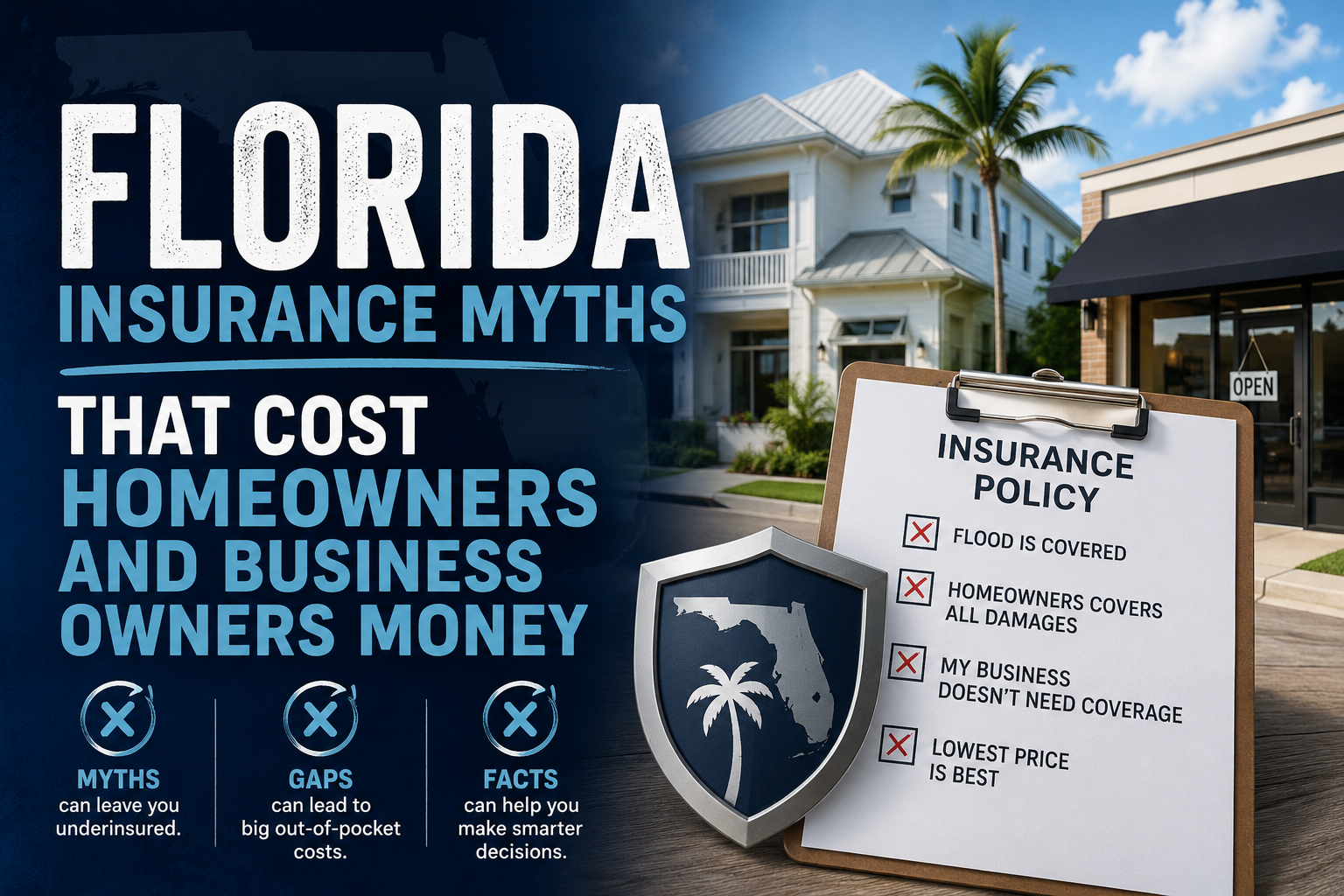
Don't be fooled by these common misconceptions about Florida Insurance.
Wide view of a white-sand Gulf beach with turquoise water, sea-oat dunes, and coastal cottages in the distance
By Norton Insurance August 15, 2026
A local's guide to Emerald Coast insurance: home, auto, flood, and business coverage, town by town, from an independent agency serving the coast since 1982.