

Car Insurance in Fort Walton Beach: A Local Driver's Guide

September 15, 2026

Why insuring a car on the Emerald Coast takes local know-how

Buying car insurance in Fort Walton Beach isn't quite the same as buying it anywhere else. Florida has its own rulebook, our stretch of the Emerald Coast has its own driving quirks, and the policy that looked fine when you lived somewhere inland may leave real gaps here. If you've just moved to the area, bought a new vehicle, or you're simply tired of a premium that keeps creeping up, it helps to understand what you're actually paying for.

This guide walks through the basics of car insurance in Fort Walton Beach: what Florida law requires, what those requirements do and don't cover, and the local factors that push rates up or down along Beal Parkway, Eglin Parkway, and the bridges. Norton Insurance has been helping neighbors here since 1982, so we'll keep it plain and practical.

The goal isn't to sell you the most expensive policy. It's to make sure you know what you're carrying, why, and where you might be exposed.

Florida is a no-fault state, and what that means for you

Florida runs on a no-fault auto insurance system, and that shapes almost everything about a Fort Walton Beach policy. In practical terms, "no-fault" means that after a typical crash, your own policy pays your initial medical bills regardless of who caused the accident. You turn to your own coverage first instead of chasing the other driver right away.

To register a vehicle in Florida, the state requires two coverages:

  • Personal Injury Protection (PIP) : a minimum of $10,000. This pays a portion of your medical costs and lost wages after an accident, no matter who was at fault.
  • Property Damage Liability (PDL) : a state-set minimum. This pays for damage you cause to someone else's property, such as their vehicle or a fence.

Florida PIP pays 80% of your medical bills and 60% of your lost wages after an accident, up to Florida's $10,000 PIP minimum. That $10,000 is the required minimum, so think of it as a floor rather than the amount most drivers actually need.

Those two required coverages are thin, and that catches people off guard. Ten thousand dollars of medical coverage disappears fast after a serious wreck, and PDL does nothing for your own vehicle. Meeting the Florida minimum keeps you legal, but it leaves a lot of daylight between what the state demands and what actually protects your finances.

The coverages that fill the gaps

Because the state minimums are so lean, most Fort Walton Beach drivers carry more than PIP and PDL. When you look at your auto coverage options, these are the ones worth understanding:

  • Bodily Injury Liability (BI) pays for injuries you cause to other people. Florida doesn't require it of every driver the way many states do, but going without it is a big gamble. If you injure someone and have no BI coverage, you can be personally on the hook for their medical bills.
  • Collision pays to repair or replace your own car after a crash, whether you hit another vehicle or an object. If you have a loan or lease, your lender almost certainly requires it.
  • Comprehensive covers your car for non-crash events: theft, vandalism, fire, a falling tree limb, or flooding. On the coast, that last one matters more than you'd think.
  • Uninsured/Underinsured Motorist (UM/UIM) steps in when the at-fault driver has no insurance or not enough. Florida has a meaningful share of uninsured drivers, so this coverage does real work.
  • Medical Payments (MedPay) supplements PIP for medical costs, which can be useful given how quickly PIP limits run out.

You don't necessarily need every one of these at the highest limit. The right mix depends on your car's value, your savings, your loan, and how much risk you're comfortable carrying yourself. That's the conversation worth having before you buy, not after a claim.

What affects your car insurance rates in Fort Walton Beach

Auto insurance in Fort Walton Beach is priced on a long list of factors, some about you and some about where and what you drive. Understanding them helps explain why your neighbor pays a different premium for a similar car.

Things tied to you and your vehicle:

  • Your driving record. Tickets and at-fault accidents are among the biggest levers.
  • The make, model, and age of your car. Repair cost, theft rates, and safety features all feed in.
  • How much you drive and your typical commute.
  • Your coverage choices and deductibles. Higher deductibles usually mean lower premiums, but more out of pocket at claim time.
  • Prior insurance history and any lapses in coverage.

Things tied to living here:

  • Local traffic patterns. Fort Walton Beach funnels a lot of vehicles across a couple of bridges and down a handful of main roads. Congestion on Beal Parkway and around the Brooks Bridge, plus heavy tourist traffic in season, raises the odds of fender-benders.
  • Seasonal visitors. Spring and summer bring drivers who don't know the roads, which nudges accident frequency up across the Emerald Coast.
  • Weather and flood exposure. More on that below.

Some of these you can't change. Others you can, and that's where working with an independent agent pays off: we can compare options across carriers to find competitive pricing, rather than fitting you into a single company's box.

Coastal weather, flooding, and your car

Living near the water is the whole point of the Emerald Coast, but it does shape your auto risk. Comprehensive coverage is the piece that responds to weather. Along Santa Rosa Sound and the low-lying areas around Fort Walton Beach, storm-driven flooding is a genuine threat to parked vehicles.

A common surprise: a flooded car is typically covered under your comprehensive auto coverage rather than under a home or flood policy. If you carry only liability and PIP/PDL, a vehicle ruined by rising water during a tropical storm generally isn't covered. Given how quickly water moves during a hurricane or a heavy summer downpour here, comprehensive is worth a serious look for anyone parking outdoors or in a flood-prone spot.

Hurricane season also brings falling limbs, wind-blown debris, and the occasional evacuation with cars left behind. None of that touches your required PIP or PDL. Comprehensive carries the load. If you're already thinking about how storm season affects your property, our overview of how hurricane and windstorm deductibles work in Florida is a useful companion read, even though auto deductibles work a little differently from the percentage-based deductibles on a home policy.

Know the local rules of the road

Rates and coverage are only part of staying protected. The other part is keeping a clean record, and that means knowing Florida's driving laws. Some of them catch newcomers off guard. Florida has a "Move Over" law, specific rules about headlights and windshield wipers, and a few quirks that surprise even longtime residents. If you enjoy that sort of thing, we rounded up a batch of them in our post on surprising traffic laws every Florida driver should know.

There's a practical angle too. Moving violations and tickets are among the fastest ways to see your premium climb, so the fewer you collect, the better your renewal tends to look. A clean record is one of the most reliable discounts there is.

How to keep your premium reasonable

You have more control over your car insurance cost than it sometimes feels like. A few practical moves that tend to help Fort Walton Beach drivers:

  1. Bundle your policies. Insuring your car and your home (or condo, or renters) with the same carrier usually earns a multi-policy discount on both. If you own a home here, it's often the single easiest saving to capture.
  2. Adjust your deductibles thoughtfully. Raising your collision and comprehensive deductibles usually lowers your premium. Just make sure you could comfortably cover that amount if you had a claim.
  3. Right-size your coverage as your car ages. For an older, lower-value vehicle, dropping collision or comprehensive may eventually make sense. For a newer car, keeping them is usually smart.
  4. Keep your record clean and ask about discounts. Safe-driver, defensive-driving-course, and low-mileage discounts exist, but you often have to ask.
  5. Shop it out periodically. Loyalty doesn't always pay in insurance. Every so often it's worth comparing carriers to see whether your current rate still holds up.

That last point is where an independent agency earns its keep. Because Norton isn't tied to one company, we can run your details across multiple carriers at once and bring back the option that fits, instead of you filling out the same form on five different websites. Auto is just one piece of the picture, too; if you want the full lay of the land, our local's guide to insuring life on the Emerald Coast ties together home, flood, auto, and business coverage in one place.

Talk to a local agent who knows the area

If you're weighing car insurance in Fort Walton Beach, the fastest way to a policy that actually fits is to talk it through with someone who lives and works here. We know the roads, the weather, and the coverage gaps that tend to bite local drivers, and as an independent agency serving Fort Walton Beach and the surrounding communities, we can compare carriers on your behalf. You can start a free quote online, reach out through our contact page, or just call the office at (850) 244-1574 and we'll walk through it with you.

Telephone icon with speech bubble.

Get A Quote

At Norton Insurance, securing your future is easy. Ready to protect what matters? Contact us for a quick quote and personalized insurance options!

Contact Norton Insurance

102 Beal Parkway Southwest, Fort Walton Beach, Florida 32548, United States

Person with shield icon featuring a checkmark.

Personal Insurance

From auto and homeowners to renters and umbrella policies, we help protect your family and property. Let’s find coverage that fits your life.

Buildings with coins, a shield, and a checkmark, suggesting financial security.

Commercial Insurance

We customize policies for your industry's risks, like general liability and workers' comp, ensuring you can run your business worry-free.

A black and white line-art icon of a factory with a large gear positioned above it.

Insurance by Industry

Every industry has unique risks. We match you with specialized coverage designed for your trade, keeping your operations protected.

Black telephone handset icon.

Kelly

i
Kelly is not a licensed insurance agent. Only licensed agents can provide quotes or coverage recommendations. Calls may be reviewed for quality and training purposes.

Speak to our virtual assistant Kelly 24/7

Microphone icon.

Microphone ready


Black check mark.

Start your custom insurance quote

Black check mark.

Instant answers to your insurance questions

Black check mark on a white background.

Schedule appointments or follow-ups

Share this article

Recent Posts

August 31, 2026
Workers’ Compensation in Florida: What Employers Need to Know This Year Workers’ compensation requirements in Florida are strict—and often misunderstood. Employers in Destin , Fort Walton Beach , and throughout Florida can face serious financial consequences if payroll and classifications are not reported accurately. One of the biggest pain points we see? Workers’ compensation audits and unexpected back premiums. Who Is Required to Carry Workers’ Compensation in Florida? Florida law generally requires workers’ compensation coverage for: Construction businesses with one or more employees Non-construction businesses with four or more employees Misclassifying employees, assuming subcontractors are exempt, or underestimating payroll can all lead to compliance issues. How Workers’ Comp Audits Really Work Most Florida workers’ compensation policies are auditable , meaning carriers review actual payroll at the end of the policy period. If payroll is: Underreported Misclassified Not updated as the business grows the result is often a large audit bill , sometimes months after the policy expires. Many employers are caught off guard by back premiums they didn’t budget for—especially after a strong growth year. Why Inaccurate Payroll Reporting Is So Costly Underreporting payroll doesn’t save money long-term. Instead, it often leads to: Unexpected audit balances Cash flow strain Policy non-renewals Increased scrutiny from carriers This is why we work proactively with our clients to track payroll changes throughout the year , not just at renewal. How We Help Employers Avoid Audit Surprises We regularly: Review estimated vs. actual payroll Monitor job classifications for accuracy Prepare clients for upcoming audits Advocate with carriers when discrepancies arise Our goal is to help employers avoid surprises by addressing issues before an audit triggers back premiums. Why Annual (and Mid-Year) Reviews Matter Florida businesses evolve quickly. If staffing, wages, or operations change mid-policy, coverage should change too. Bottom Line: Workers’ compensation audits are unavoidable—but large back premiums often are. Having an agency that tracks payroll changes, prepares for audits, and advocates for corrections helps Florida employers stay compliant while controlling costs.
August 31, 2026
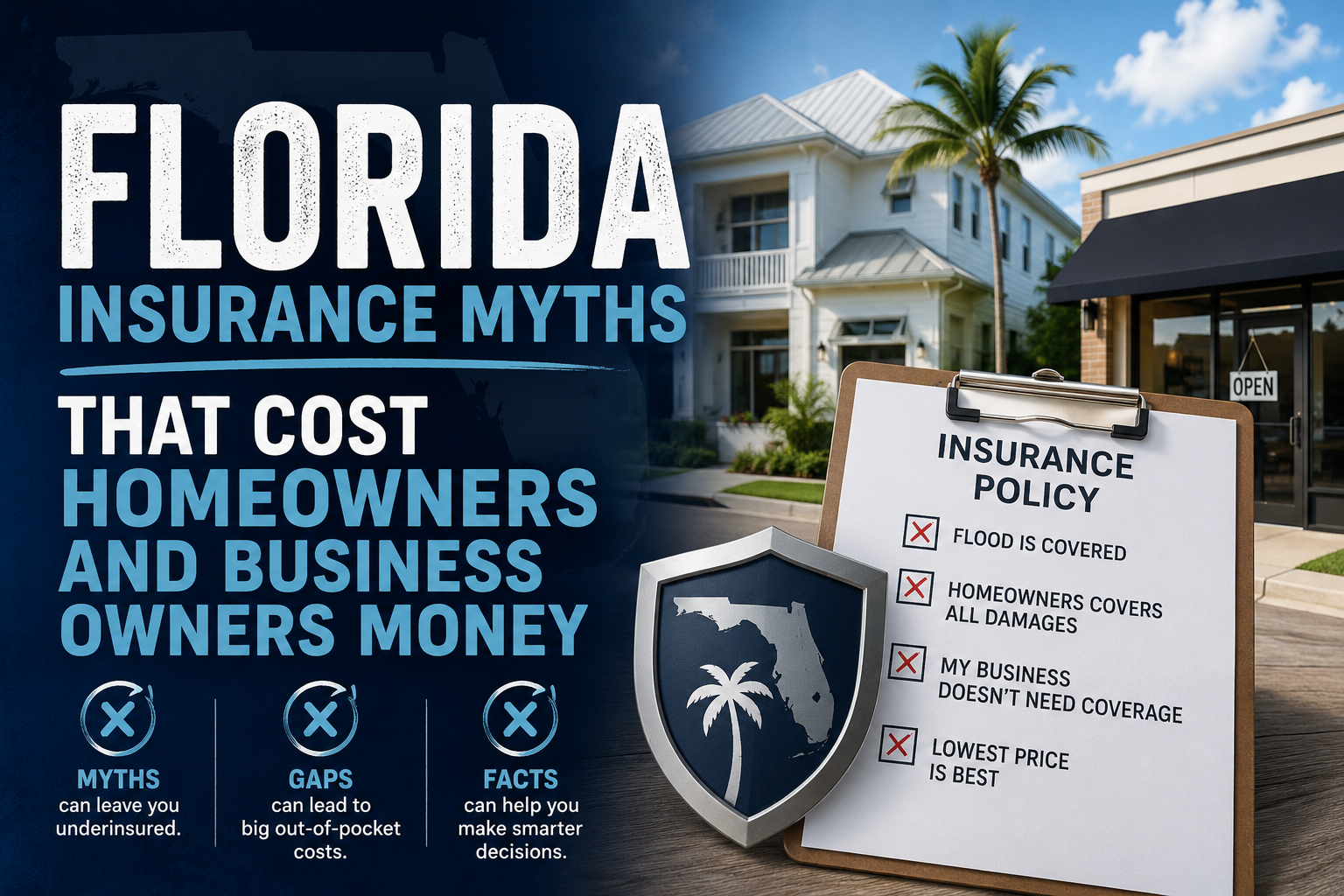
Don't be fooled by these common misconceptions about Florida Insurance.
Wide view of a white-sand Gulf beach with turquoise water, sea-oat dunes, and coastal cottages in the distance
By Norton Insurance August 15, 2026
A local's guide to Emerald Coast insurance: home, auto, flood, and business coverage, town by town, from an independent agency serving the coast since 1982.