Emerald Coast Insurance: A Local's Guide to Life on the Gulf
Insuring a Gulf Coast life the local way
Living on the Emerald Coast is a little different from living almost anywhere else in the country, and so is insuring it. The same salt air and Gulf breeze that make this place worth calling home also put your house, your car, and your business in the path of hurricanes, flooding, and coverage rules that surprise people who move here from somewhere drier. Good emerald coast insurance is really a set of decisions made with the local map in front of you, not a single one-size-fits-all policy.
This guide walks through the coverage that matters most along our stretch of the Panhandle: home, auto, flood, and business. It's meant as a starting point, not a rulebook, because a beach cottage on 30A and a family home in Crestview don't carry the same risks and shouldn't carry identical policies.
We've been the neighborhood agency here since 1982, so consider this the conversation we'd have if you dropped by the office on Beal Parkway.
Why local and independent matters here
Plenty of national carriers will happily sell you a policy from a call center three states away. The trouble is that Panhandle risk is specific. Wind zones shift block by block. Flood exposure changes as you move from the beach toward the bay or inland toward Niceville and Crestview. A rep who has never watched a named storm churn in the Gulf tends to miss those details.
An independent agent works differently. Because a working emerald coast insurance agency isn't tied to a single company, we can compare several carriers and match the one whose appetite and pricing actually fit your address. When a carrier pulls out of a coastal market (which happens in Florida), an independent shop moves your coverage instead of leaving you scrambling.
Being an independent emerald coast insurance company also means we answer the phone after the storm, not just before the sale. When a claim gets complicated, and coastal claims often do, having someone local who knows your policy and your neighborhood is worth more than a lower quote from a company you'll never speak to twice. That's the part that doesn't show up in an online estimate.
A town-by-town snapshot
Norton serves a wide slice of the Panhandle, and the risk picture is genuinely different from one town to the next.
- Destin. Dense with waterfront and near-water homes, condos, and vacation properties. Wind and flood exposure run high, and second homes add their own wrinkles. If you own here, our Destin home insurance guide digs into what drives cost and how to keep it manageable.
- Fort Walton Beach. A mix of established neighborhoods, rentals, and small businesses. Our office sits right here, and it's a good example of a market where bundling home and auto often pays off.
- Miramar Beach & Sandestin. Resort-heavy, with lots of condos and rental units where the line between personal and commercial coverage matters.
- Santa Rosa Beach & 30A. Grayton Beach, Seaside, Seacrest, Inlet Beach, and Alys Beach. High-value coastal homes, heavy short-term rental activity, and serious wind and flood exposure. The 30A coastal home coverage breakdown covers this corner in depth.
- Niceville & the bay side. More sheltered than the open Gulf, but bayfront and low-lying spots still carry real flood risk.
- Crestview & DeFuniak Springs. Inland towns where wind and flood pressure ease and pricing usually reflects that. Coverage still matters; the risks just look different.
Wherever you land on that map, the coverage conversation starts the same way: with your actual address, not a ZIP-code average. You can see the full list of communities we cover on our service area pages.
Home insurance: the anchor policy
For most families, the home policy is the big one. On the Emerald Coast, a few things deserve extra attention.
Hurricane and wind deductibles. Florida homeowner policies carry a separate hurricane deductible that's typically a percentage of your home's insured value rather than a flat dollar amount, and the exact percentage varies by carrier. On a coastal home, that can add up to a meaningful number, so it's worth knowing yours before a storm is named. Our rundown on how Florida deductibles actually work explains the difference between your standard and hurricane deductibles.
Rebuild cost, not market price. Your policy should be built around what it costs to rebuild your home, not what you'd sell it for. Coastal construction and post-storm demand can push rebuild costs above what owners expect.
Wind mitigation credits. Features like a hip roof, roof-to-wall connections, and impact-rated windows or shutters can lower your premium. A wind mitigation inspection often pays for itself.
Whether you own a single-family home, a condo, or a rental, our homeowners coverage overview is a good place to see how the pieces fit together.
Flood insurance: nearly always a separate policy
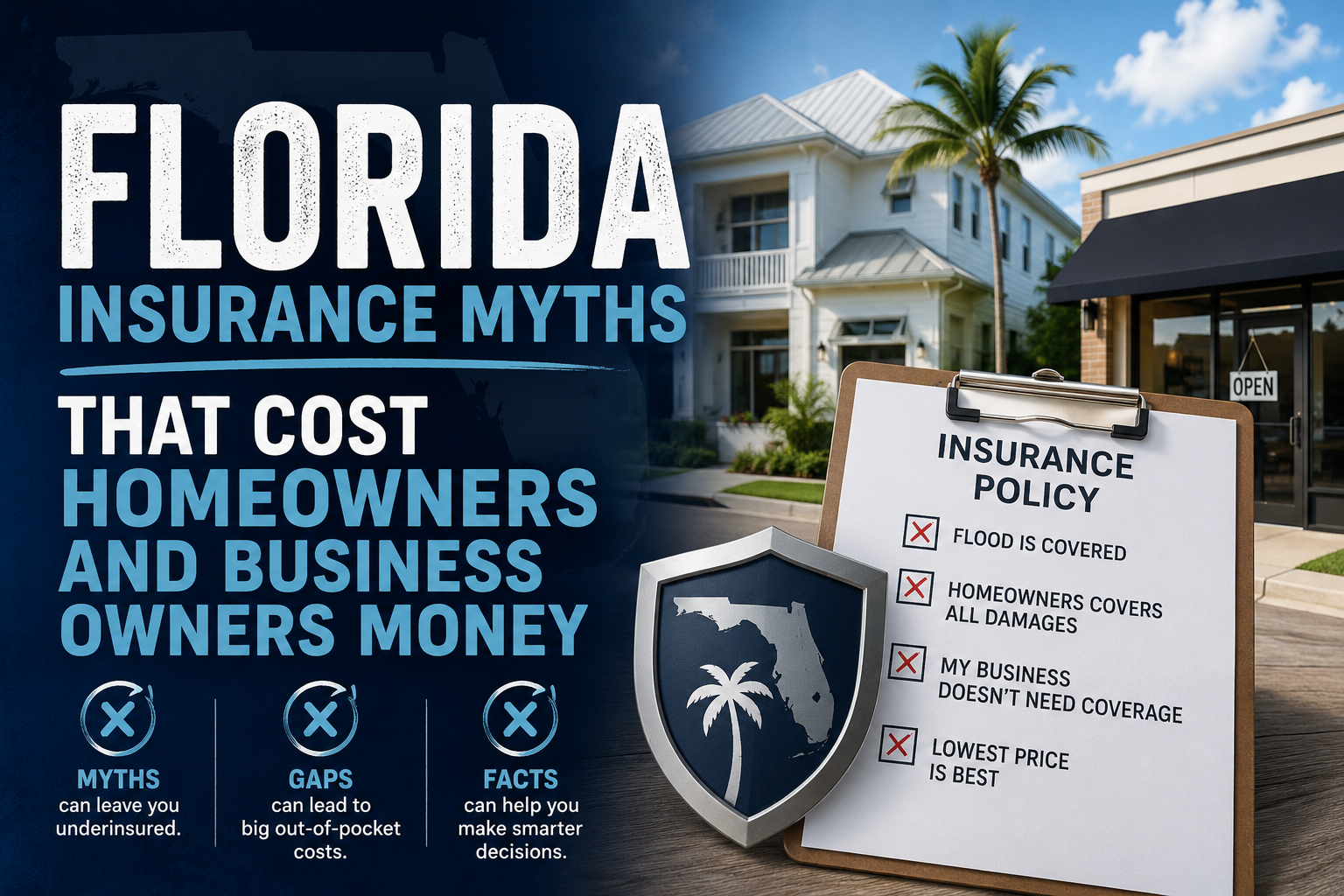
This is the point that trips up the most people, so it's worth stating plainly: a standard homeowners policy generally does not cover flood. Along the Gulf, storm surge and heavy rain are among the events that can do the most damage, and they typically fall under a separate flood policy.
You don't have to sit in a mapped high-risk zone to flood, either. Plenty of claims come from properties just outside the lines FEMA draws. That's why we'll often recommend a dedicated flood insurance policy even when a lender doesn't strictly require one. The premium in a lower-risk area is usually modest compared to what a few inches of water can cost.
If you're buying or refinancing, sort out flood early. It affects your budget and, in high-risk zones, your ability to close. Flood policies also typically carry a waiting period before coverage kicks in, so buying one the week a storm forms won't help, and this is a decision to make in the calm stretches of the year.
Auto insurance: Florida rules and coastal quirks
Florida is a no-fault state, which shapes every auto policy written here. A couple of basics worth knowing:
- Personal Injury Protection (PIP) is required and pays a portion of your own medical costs after an accident regardless of fault.
- Property Damage Liability is also required, covering damage you cause to someone else's property.
- Bodily injury liability, uninsured motorist, and collision/comprehensive are not all mandatory, but going without them leaves real gaps, especially given how many uninsured drivers share Florida roads.
Local conditions matter too. Tourist season packs Highway 98 and the 30A corridor, seasonal drivers who don't know the roads raise the odds of a fender-bender, and comprehensive coverage is what handles a car flooded in a storm or dinged by wind-blown debris. Our auto insurance page lays out the coverage types, and bundling that policy with your home often trims both premiums.
Business insurance: coverage that fits coastal operations
If you run a shop, restaurant, rental portfolio, or contracting business here, your commercial coverage carries the same coastal weight as your home policy, plus the liability and operational risks that come with running a company.
Most small local businesses build around a handful of pieces:
- Commercial property for your building, equipment, and inventory, with the same wind and flood considerations that apply to homes.
- General liability for third-party injury and property damage claims.
- Workers' compensation , which Florida requires for most employers once you hit the state's employee thresholds.
- Business interruption , which helps replace income when a storm forces you to close.
Seasonal revenue swings and hurricane downtime make that last one especially relevant on the Emerald Coast, where a chunk of the year's income can arrive in a few busy months. Depending on your trade, you may also need commercial auto, professional liability, or a builder's risk policy for a project in progress. Our commercial insurance hub is the place to start mapping out what your operation needs.
How the pieces fit together
The advantage of working with one local agency across home, auto, flood, and business is that nothing falls through the cracks between policies. A few habits that serve our clients well:
- Review coverage before hurricane season, not during it. Once a storm enters the forecast cone, carriers often pause new policies and changes.
- Bundle where it makes sense. Home and auto together usually earn a discount and keep everything under one roof.
- Revisit rebuild costs every couple of years. Construction prices move, and underinsured homes are a common and avoidable problem.
- Ask about the gaps. Flood, sewer backup, and coverage for a golf cart or boat are the ones people most often discover they're missing after a loss.
None of this has to be complicated. It just has to be built around your address and how you actually live and work here.
Let's build the right coverage for your corner of the coast
From Crestview down to the 30A beaches, Norton Insurance has spent decades helping neighbors protect what they've built along the Emerald Coast. If you'd like a clear-eyed look at your home, auto, flood, or business coverage, request a free quote or reach out to the team, or just call us at (850) 244-1574 and we'll talk it through.
Get A Quote
At Norton Insurance, securing your future is easy. Ready to protect what matters? Contact us for a quick quote and personalized insurance options!
Contact Norton Insurance
Personal Insurance
From auto and homeowners to renters and umbrella policies, we help protect your family and property. Let’s find coverage that fits your life.
Commercial Insurance
We customize policies for your industry's risks, like general liability and workers' comp, ensuring you can run your business worry-free.
Insurance by Industry
Every industry has unique risks. We match you with specialized coverage designed for your trade, keeping your operations protected.
Kelly
Speak to our virtual assistant Kelly 24/7
Microphone ready
Start your custom insurance quote
Instant answers to your insurance questions
Schedule appointments or follow-ups