Landlord Insurance in Florida: What Rental Property Owners Need
What changes about your coverage when you rent out a Florida home
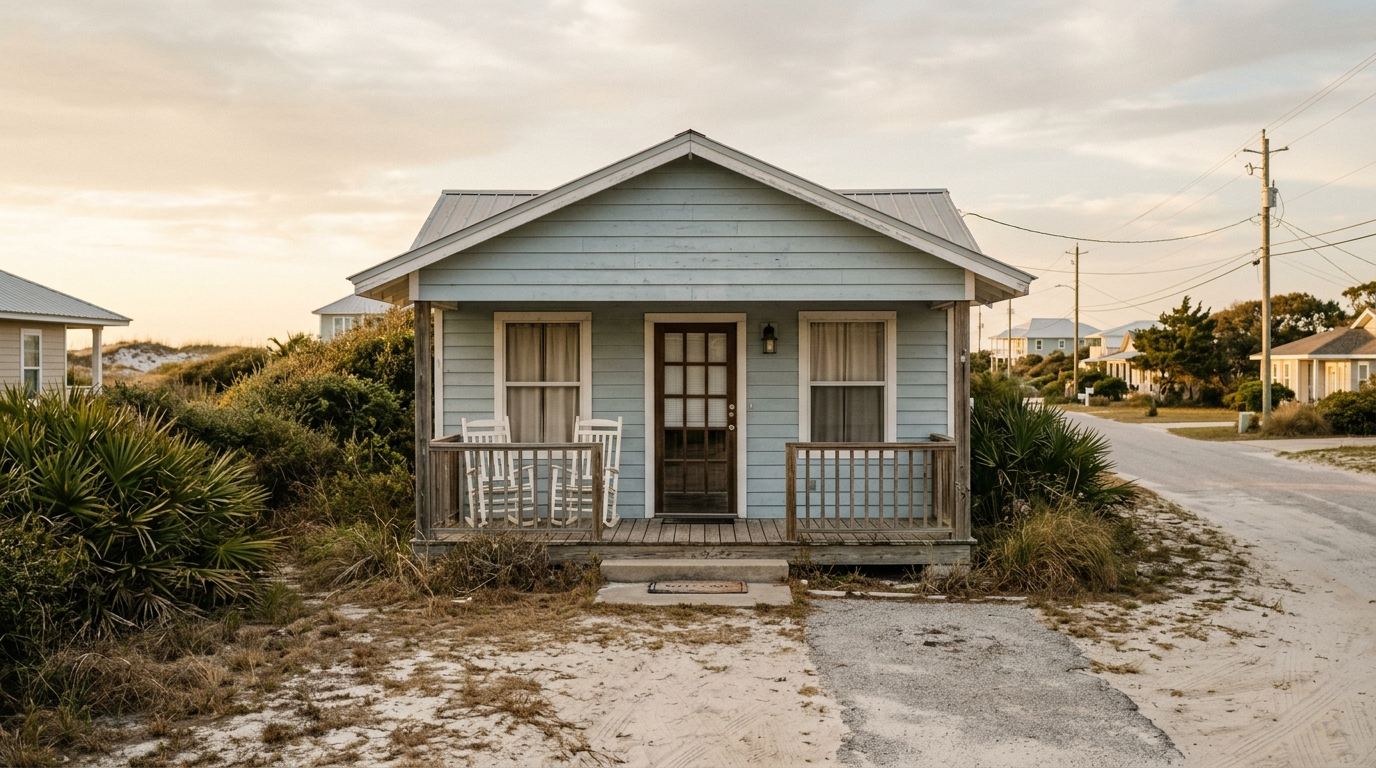
So you own a rental down here on the Emerald Coast. Maybe a duplex in Fort Walton Beach, a single-family home you moved out of but couldn't part with, or a beach cottage near Santa Rosa Beach that pays for itself with monthly tenants. The moment someone else lives in a property you own, the insurance rules change. Landlord insurance in Florida is where a lot of new property owners get tripped up, usually by assuming their old homeowners policy still applies.
It doesn't. A homeowners (HO) policy is written for an owner-occupied home, and once you hand over the keys to a tenant, that coverage can quietly stop doing its job. What you need instead is a rental property policy, often called a dwelling-fire policy, built for exactly this situation.
There are a few things worth understanding before you rent the place out: how these policies work, what they cover, and why your tenant needs their own insurance too.
Why your homeowners policy won't cover a rental
An HO-3 homeowners policy assumes you live in the home. It bundles coverage for the structure, your personal belongings, and your personal liability all under one roof, literally. The insurer prices that risk around an owner who's on-site, notices the drip under the sink, and keeps the place up.
Rent it out and the risk profile shifts. Tenants generally don't maintain a property the way an owner does, the home may sit empty between leases, and you're no longer storing your own furniture there. If you file a claim on a home your insurer believed was owner-occupied but is actually a rental, you can run into a denial for misrepresenting how the property is used. That's a rough surprise to discover after a kitchen fire.
The fix is to insure the property for what it actually is. For a home you're renting out long-term, that means a dwelling-fire policy built for rental properties rather than a standard homeowners form.
Landlord insurance vs. the dwelling-fire (DP) policy
People say "landlord insurance" and "dwelling-fire policy" almost interchangeably, and that's close enough for everyday use. Technically, most rental homes in Florida are covered under a dwelling-fire policy , the DP series (DP-1, DP-2, and DP-3).
The DP-3 is the one most landlords want. Think of it as the rental-property cousin of the HO-3:
- DP-1: the most basic form, typically named-peril and often paying out on an actual-cash-value basis (depreciation subtracted). Cheap, but thin.
- DP-2: a broader named-peril form with more covered causes of loss and usually replacement cost on the structure.
- DP-3: the broadest, written on an open-peril ("all-risk") basis for the dwelling, meaning it covers any cause of loss except those specifically excluded. Replacement cost on the building is typically standard.
For most rentals you'll want a DP-3 form with replacement cost coverage on the structure so a covered loss rebuilds the home at today's construction prices rather than a depreciated value. Underinsuring the structure is a common and expensive mistake, especially with how much rebuild costs have climbed along the coast.
What a landlord policy actually covers
A well-built rental policy usually includes three big pieces:
- The dwelling (structure). The building itself, plus attached and often detached structures like a garage or shed. This is the core of the policy.
- Landlord liability. If a tenant or their guest is injured on the property and you're found responsible (a fall on a broken step, say), this responds to the claim and legal costs.
- Loss of rental income. If a covered loss makes the home uninhabitable, this reimburses the rent you'd have collected while it's repaired. More on this below, because it's the part owners underestimate most.
You can also add coverage for things like the appliances and window treatments you own inside the unit, landlord equipment, and vandalism, which is a real consideration for a home that sits empty between tenants.
Loss of rent: the coverage that pays your mortgage
Here's a scenario. A pipe bursts in your Niceville rental in July. The repairs take two months, and no tenant can live there while the floors dry out and the drywall gets replaced. Your mortgage doesn't pause. Your tax bill doesn't pause. But your rent check just stopped.
Fair rental value coverage, the loss-of-rent piece, is designed for exactly that gap. When a covered peril forces your tenants out, it reimburses the rental income you lose during the repair period, up to the policy limit and time frame. For most landlords this is the difference between an inconvenient couple of months and a genuine financial hole.
Two things to check on this coverage:
- The limit and duration. Policies cap how much and how long they'll pay. Make sure the limit reflects your actual monthly rent.
- The trigger. Loss of rent only applies when a covered loss causes the vacancy, not when a tenant simply stops paying or breaks the lease. That's a different risk, and it's not what a property policy handles.
Liability: the risk you can't see
Property damage is the coverage owners think about first, but liability is often the bigger exposure. As a landlord, you can be held responsible when someone is hurt on your property because of a condition you should have addressed: a loose railing, an unlit stairwell, a pool without proper fencing.
Florida rentals near the water bring their own wrinkles: docks, decks, boardwalks, and pools all raise the liability stakes. A solid landlord policy carries liability limits high enough to protect the property's value and your other assets, and many owners layer an umbrella policy on top for rentals to extend that protection further. If you own several units, this is worth a conversation.
Flood is separate, and it matters here
This is Florida, so it has to be said clearly: your landlord policy generally does not cover flood. Dwelling-fire policies, like homeowners policies, typically exclude flood damage. Coverage for rising water comes from a separate flood policy, whether through the National Flood Insurance Program or a private flood carrier.
Along the Emerald Coast, that's not an optional footnote. If your rental sits in a flood zone, and many properties near Destin, Miramar Beach, and the 30A communities do, your lender will likely require it, and you'd want it regardless. A single storm surge can do more damage than years of premiums cost. It's worth reviewing your property's separate flood insurance options alongside your landlord coverage so there's no gap between the two.
While you're at it, understand how Florida's hurricane and windstorm deductibles work on the dwelling coverage. Those are percentage-based rather than flat-dollar, and they apply differently than a standard deductible. Our breakdown of how deductibles work on Florida policies is a good primer before renewal season.
Your tenant's stuff isn't your problem, and that's the point
One of the most useful things you can do as a landlord costs you nothing: require your tenants to carry renters insurance.
Here's why it matters to you. Your landlord policy covers the building. It does not cover your tenant's belongings: their furniture, electronics, clothes, none of it. If a fire or storm destroys their possessions, they're on their own unless they carry their own coverage. Guess who they'll be unhappy with if they assumed your policy had them covered? A renters policy also gives the tenant their own liability coverage, which can shield you when a guest of theirs is injured or the tenant accidentally causes damage.
Requiring renters coverage in the lease (and asking to be named as an additional interest so you're notified if it lapses) is one of the cleanest ways to reduce friction and shift risk off your own policy. For the tenant it's usually a small monthly cost, and it makes the whole arrangement run smoother. Point your tenants toward a straightforward renters insurance policy and everyone's better protected.
A few Florida-specific landlord notes
Owning a rental in Northwest Florida comes with local realities worth planning for:
- Seasonal vacancy. Long-term rentals turn over, and a home sitting empty between leases carries different risk. If a property will be vacant for an extended stretch, tell your agent. Extended vacancy can affect coverage and may call for a specific solution.
- Short-term vs. long-term. If you're renting on a weekly or nightly basis through Airbnb or VRBO, a standard landlord policy is not the right fit. That's a commercial-flavored exposure with guests cycling through, and it needs its own kind of coverage. Talk to us before you list a nightly rental so it's insured correctly.
- Wind and roof age. Coastal wind exposure and older roofs both drive rental premiums. Mitigation features and a newer roof can help, the same way they do on an owner-occupied home.
- Multiple properties. If you're building a small portfolio, ask about combining rentals or adding an umbrella, which is often simpler and cheaper than juggling standalone policies.
For the bigger picture of how home, flood, auto, and business coverage fit together in this area, our local guide to insuring life on the Emerald Coast puts landlord coverage in context alongside everything else you might insure. And if your rental will be sitting empty for a while (between tenants, during a renovation, or after an inheritance), the rules shift again. Our overview of covering a vacant or unoccupied home in Florida walks through that specific situation.
Let's get your rental covered the right way
Every rental is a little different. A bay-side duplex in Fort Walton Beach carries different risks than a beach cottage near Santa Rosa Beach, so the right policy depends on your property, your tenants, and how you rent. As an independent agency that's been part of this community since 1982, Norton Insurance can match your rental to the coverage that actually fits it, flood coverage available, without the guesswork.
Ready to protect your investment and your rental income? Start your free quote online, reach out to our team, or call us at (850) 244-1574 and we'll walk through your rental property together.
Get A Quote
At Norton Insurance, securing your future is easy. Ready to protect what matters? Contact us for a quick quote and personalized insurance options!
Contact Norton Insurance
Personal Insurance
From auto and homeowners to renters and umbrella policies, we help protect your family and property. Let’s find coverage that fits your life.
Commercial Insurance
We customize policies for your industry's risks, like general liability and workers' comp, ensuring you can run your business worry-free.
Insurance by Industry
Every industry has unique risks. We match you with specialized coverage designed for your trade, keeping your operations protected.
Kelly
Speak to our virtual assistant Kelly 24/7
Microphone ready
Start your custom insurance quote
Instant answers to your insurance questions
Schedule appointments or follow-ups
Recent Posts