

Do you need separate Golf Cart Insurance?

March 24, 2026

A common sight in our town is that of a family in a golf cart cruising the neighborhood to a friend's house or taking a scenic drive down a beach road. It's a sight notorious with beach towns and tourist locations. Golf carts have become part of the coastal lifestyle — fun, convenient, and a great way to enjoy the community around you. And for the luxury homes that house our hundreds of thousands of tourists every year, the golf cart can be an essential amenity for transportation. But with that freedom comes an important question:

Do You Need Insurance for Your Golf Cart?

The answer depends on how you use it, where you drive it, and whether it's registered for road use. Based on the guidelines outlined in our previous blog, here's a simple breakdown.

When Golf Carts May Be Covered Under Homeowners Insurance

If your golf cart is not registered for road use and is primarily used on your own property, your homeowners policy may provide limited coverage. In this situation, golf carts are often treated similarly to items like riding lawnmowers or other personal equipment.

However, this coverage is typically:

  • Limited in scope
  • Restricted to certain locations
  • May not include liability in all situations

Once you start driving your golf cart beyond your property — such as through neighborhoods, to the beach, or around town — coverage under a homeowners policy may no longer apply.

When You Likely Need Golf Cart Insurance

You'll typically want a separate golf cart policy if your golf cart is:

  • Driven in neighborhoods or communities
  • Used on public roads or designated golf cart routes
  • Registered as a low-speed vehicle
  • Used by guests, renters, or family members
  • Frequently used away from your home

When a golf cart is registered for road use, it's generally treated more like a vehicle. This usually means it needs:

  • Liability coverage
  • Registration requirements
  • Safety equipment (lights, mirrors, seat belts, etc.)

This is especially important because accidents involving golf carts can still lead to property damage, injuries, and liability exposure — just like any other vehicle.

What About Vacation Homes and Rental Properties?

Golf carts at vacation homes or rental properties create an additional layer of risk.

If renters or guests are using your golf cart:

  • Your homeowners policy may not cover liability
  • You may be responsible for accidents involving guests
  • Coverage gaps are more common in rental situations

Because of this, many homeowners with vacation or rental properties choose to carry separate golf cart insurance for added protection.

What About Tourists and Visitors?

Visitors often assume they're covered when renting or borrowing a golf cart — but that's not always the case.

Tourists should consider:

  • Whether the rental company provides liability coverage
  • Whether their homeowners policy applies off-property
  • Whether their auto policy extends coverage (often it does not)

Because coverage varies widely, it's a good idea for visitors to confirm coverage before driving.

Golf carts may seem low-risk, but they can still cause:

  • Injuries to pedestrians
  • Damage to vehicles or property
  • Liability claims
  • Medical expenses

Having the right coverage helps ensure that a fun ride doesn't turn into an expensive surprise.

Because golf cart usage varies so much by community, the best approach is to review your specific situation and make sure there aren't any coverage gaps — whether you're a homeowner, vacation property owner, or visitor enjoying the ride.

Telephone icon with speech bubble.

Get A Quote

At Norton Insurance, securing your future is easy. Ready to protect what matters? Contact us for a quick quote and personalized insurance options!

Contact Norton Insurance

102 Beal Parkway Southwest, Fort Walton Beach, Florida 32548, United States

Person with shield icon featuring a checkmark.

Personal Insurance

From auto and homeowners to renters and umbrella policies, we help protect your family and property. Let’s find coverage that fits your life.

Buildings with coins, a shield, and a checkmark, suggesting financial security.

Commercial Insurance

We customize policies for your industry's risks, like general liability and workers' comp, ensuring you can run your business worry-free.

A black and white line-art icon of a factory with a large gear positioned above it.

Insurance by Industry

Every industry has unique risks. We match you with specialized coverage designed for your trade, keeping your operations protected.

Black telephone handset icon.

Kelly

i
Kelly is not a licensed insurance agent. Only licensed agents can provide quotes or coverage recommendations. Calls may be reviewed for quality and training purposes.

Speak to our virtual assistant Kelly 24/7

Microphone icon.

Microphone ready


Black check mark.

Start your custom insurance quote

Black check mark.

Instant answers to your insurance questions

Black check mark on a white background.

Schedule appointments or follow-ups

Share this article

Recent Posts

August 31, 2026
Workers’ Compensation in Florida: What Employers Need to Know This Year Workers’ compensation requirements in Florida are strict—and often misunderstood. Employers in Destin , Fort Walton Beach , and throughout Florida can face serious financial consequences if payroll and classifications are not reported accurately. One of the biggest pain points we see? Workers’ compensation audits and unexpected back premiums. Who Is Required to Carry Workers’ Compensation in Florida? Florida law generally requires workers’ compensation coverage for: Construction businesses with one or more employees Non-construction businesses with four or more employees Misclassifying employees, assuming subcontractors are exempt, or underestimating payroll can all lead to compliance issues. How Workers’ Comp Audits Really Work Most Florida workers’ compensation policies are auditable , meaning carriers review actual payroll at the end of the policy period. If payroll is: Underreported Misclassified Not updated as the business grows the result is often a large audit bill , sometimes months after the policy expires. Many employers are caught off guard by back premiums they didn’t budget for—especially after a strong growth year. Why Inaccurate Payroll Reporting Is So Costly Underreporting payroll doesn’t save money long-term. Instead, it often leads to: Unexpected audit balances Cash flow strain Policy non-renewals Increased scrutiny from carriers This is why we work proactively with our clients to track payroll changes throughout the year , not just at renewal. How We Help Employers Avoid Audit Surprises We regularly: Review estimated vs. actual payroll Monitor job classifications for accuracy Prepare clients for upcoming audits Advocate with carriers when discrepancies arise Our goal is to help employers avoid surprises by addressing issues before an audit triggers back premiums. Why Annual (and Mid-Year) Reviews Matter Florida businesses evolve quickly. If staffing, wages, or operations change mid-policy, coverage should change too. Bottom Line: Workers’ compensation audits are unavoidable—but large back premiums often are. Having an agency that tracks payroll changes, prepares for audits, and advocates for corrections helps Florida employers stay compliant while controlling costs.
August 31, 2026
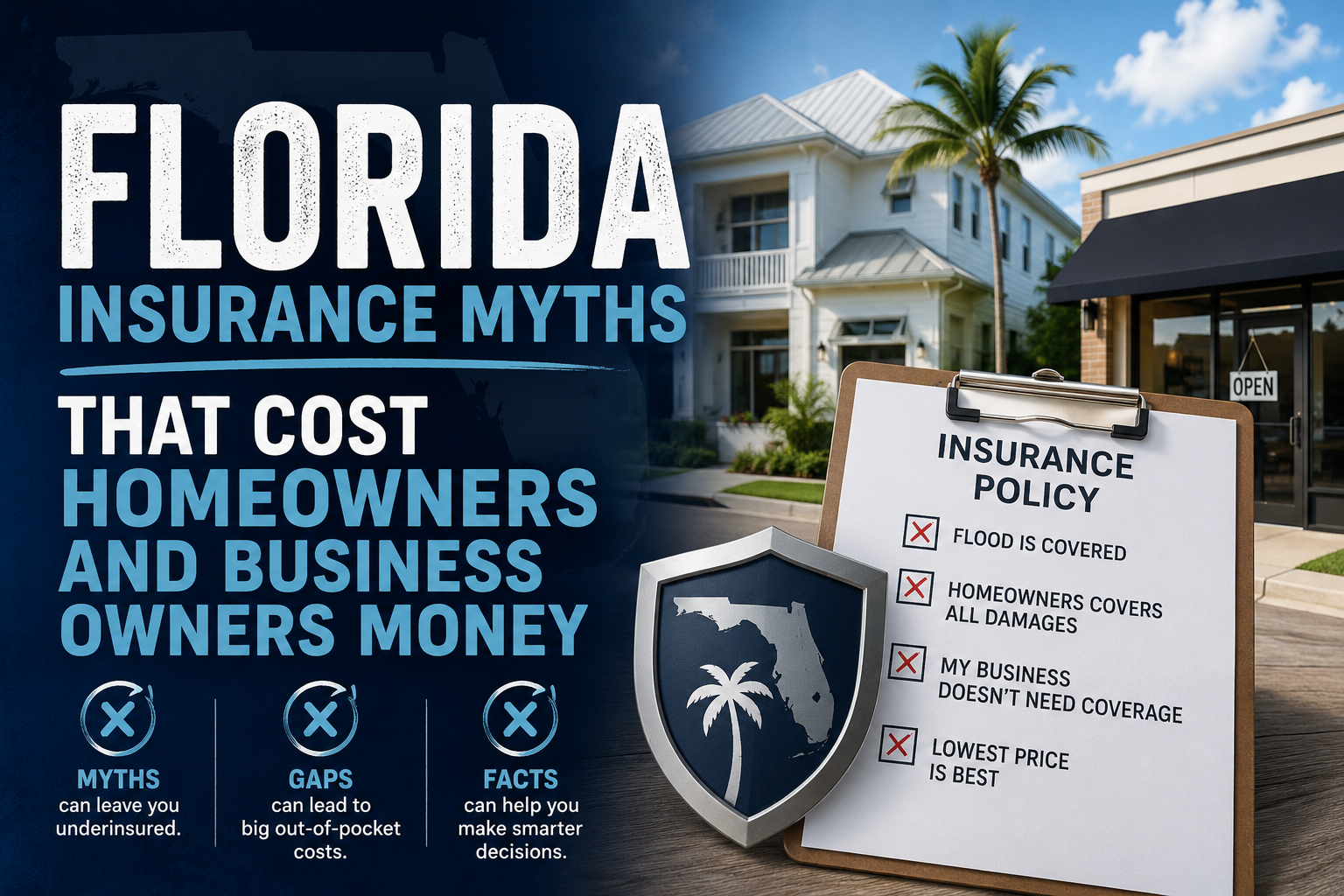
Don't be fooled by these common misconceptions about Florida Insurance.
Wide view of a white-sand Gulf beach with turquoise water, sea-oat dunes, and coastal cottages in the distance
By Norton Insurance August 15, 2026
A local's guide to Emerald Coast insurance: home, auto, flood, and business coverage, town by town, from an independent agency serving the coast since 1982.